Slack Nodes
Slack is a widely adopted collaboration platform for team communication. MaestroHub provides seamless integration to send automated notifications, alerts, and production updates directly to Slack channels or individual users using connector nodes.
Configuration Quick Reference
| Field | What you choose | Details |
|---|---|---|
| Parameters | Connection, Function, Function Parameters, Timeout Override | Select the connection profile, function, configure function parameters with expression support, and optionally override timeout. |
| Settings | Description, Timeout (seconds), Retry on Timeout, Retry on Fail, On Error | Node description, maximum execution time, retry behavior on timeout or failure, and error handling strategy. All execution settings default to pipeline-level values. |
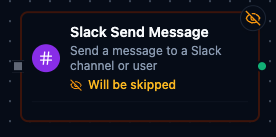
Slack Send Message Node
Slack Send Message Node
Send text messages to Slack channels or directly to users for automated notifications and team collaboration.
Supported Function Types:
| Function Name | Purpose | Common Use Cases |
|---|---|---|
| Send Message | Send notifications to Slack channels or direct messages to users | Production alerts, quality notifications, shift handover summaries, workflow status updates |
How It Works
When the pipeline executes, the Slack Send Message node:
- Connects to the Slack workspace using the selected connection profile's OAuth token
- Resolves the target recipient (channel or user) from the function configuration
- Sends the message with any configured bot customization (username, icon emoji)
- Optionally replies to a thread if a thread timestamp is provided
Configuration
| Field | What you choose | Details |
|---|---|---|
| Connection | Slack connection profile | Select a pre-configured Slack connection from your connection library |
| Function | Send Message function | Choose a Slack Send Message function that defines recipient, message content, and optional bot appearance |
| Function Parameters | Channel/User, Message Text, Bot Username, Icon Emoji, Thread Timestamp | Override function defaults with pipeline data using ((parameterName)) syntax |
For detailed function configuration options including channel/user selection, bot customization, and thread replies, see the Slack Integration Guide documentation.